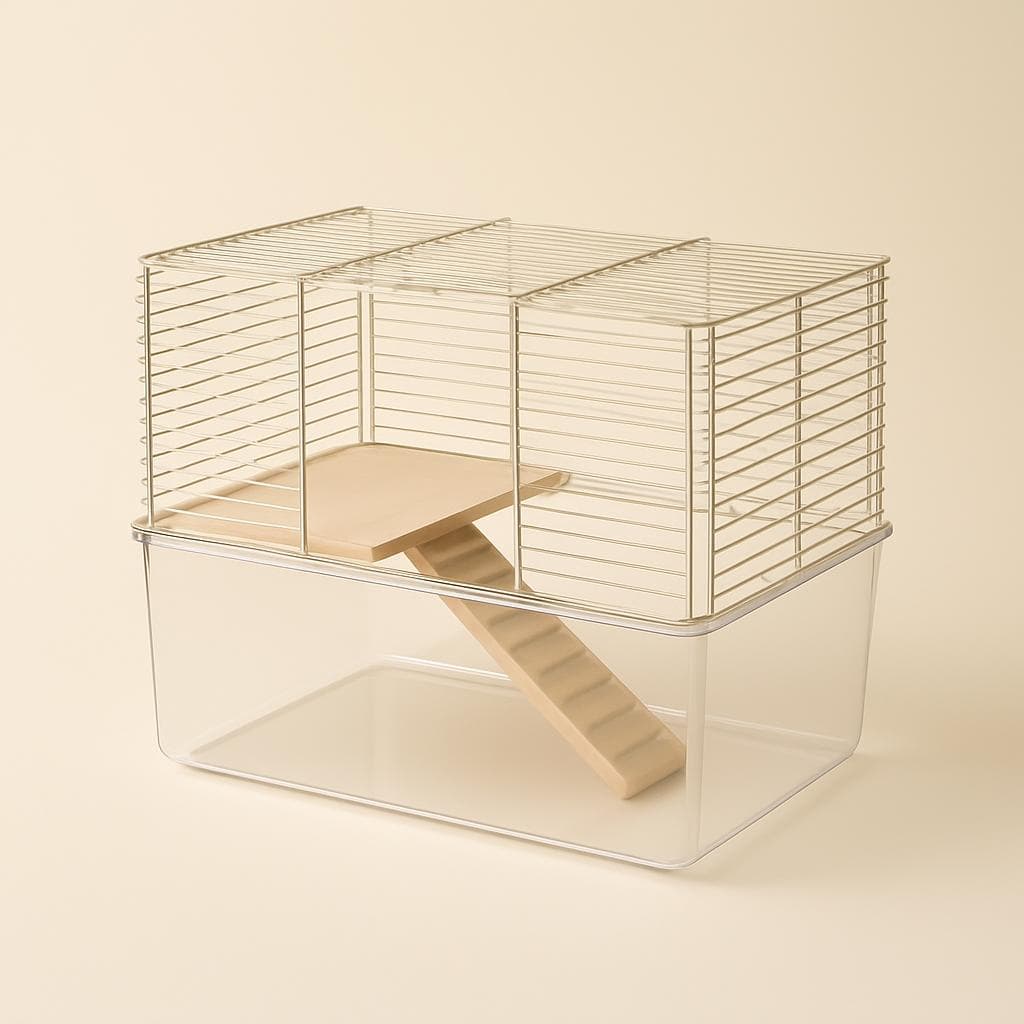
Most of the cages sold cheaply as a first hamster home in the UAE were designed for mice. They have a small footprint, a wire top with tubes and platforms bolted on to make the box look bigger in a photograph, and a bedding tray about four centimetres deep. None of that suits a Syrian hamster, and most of it does not really suit a dwarf hamster either. Half a square metre of unbroken floor and 25cm of bedding is the floor we recommend, not the ceiling, and it is worth understanding why before you buy the cheapest box on the shelf.
Floor area is the number that matters, not total volume
Retailers like to advertise total cage volume because it is a bigger, more impressive number, and a tall cage full of tubes and platforms can hit a large volume figure on a small footprint. Hamsters do not use height the way the marketing implies. In the wild they run for kilometres a night across flat ground, and what a cage needs to replicate is continuous, unbroken floor space, not vertical stacking. A minimum working figure is around 80cm by 50cm of actual floor, roughly 4,000 square centimetres, before you subtract anything for a wheel or a house sitting on top of it. Levels connected by tubes look generous but each one is usually too small to count as real floor space on its own.
Bedding depth is not decoration
Hamsters are burrowing animals, and digging is not a preference, it is a behaviour they are strongly driven to perform whether the cage allows it or not. A tray with a few centimetres of shavings gives them nowhere to express that, and you will see the frustration show up as pacing, scrabbling at the corners, or trying to dig through the plastic base itself. Twenty to thirty centimetres of a paper based or aspen substrate lets a Syrian hamster build a proper tunnel system, which noticeably calms a lot of animals that seemed restless in a shallow tray.
What bar chewing is really telling you
People sometimes assume bar chewing is just a hamster keeping its teeth in check, since a hamster's incisors do grow continuously. In our experience it is much more often a stress or boredom signal than a dental one, and it tends to show up hardest in animals kept in cages that are too small or too empty. It also does real damage, wearing down the incisors unevenly or chipping them, which is the opposite of what people assume it is doing.
A hamster chewing the bars is not asking for a chew toy. It is telling you the cage is too small, too empty, or both.
If you already own a small starter cage, you do not have to throw it away. Plenty of keepers convert a large plastic storage bin into a proper enclosure at a fraction of the cost of a premium branded cage, and it solves both the floor area and bedding depth problem in one move. If you are buying new, look for a wheel of at least 28 to 30cm for a Syrian hamster too, a wheel that is too small forces the spine to curve while running, which is a habit that is hard to spot until you know to look for it.
Mentioned in this note
What we would reach for
- New in
Burrow & Bramble · Hamster and small pets
Burrow & Bramble deep base habitat
A 26cm deep base so bedding can go deep enough for real burrows, with 0.75 square metres of floor.
4.8 (26)Rated 4.8 out of 5 from 26 reviewsAED 340 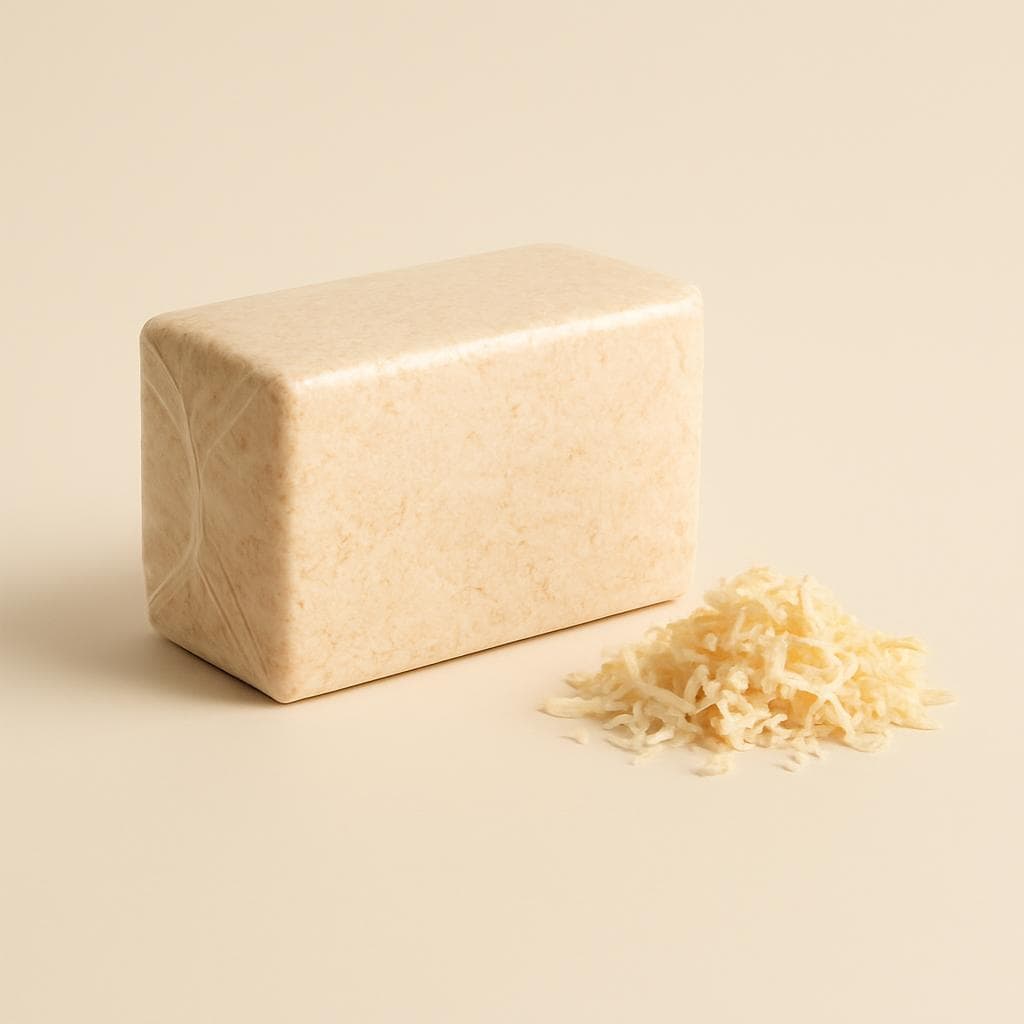
Burrow & Bramble · Hamster and small pets
Aspen bedding, 20 litre
Kiln dried aspen with no aromatic oils, so burrows hold their shape and lungs stay clear.
4.4 (41)Rated 4.4 out of 5 from 41 reviewsAED 32
Burrow & Bramble · Hamster and small pets
Silent spin wheel, 28cm
28cm, solid surface, ball bearing mount. Large enough that a Syrian runs with a straight back.
4.7 (58)Rated 4.7 out of 5 from 58 reviewsAED 88